Beyond its well-known wonders - Petra, Wadi Rum, and the Dead Sea - Jordan preserves some significant Islamic and religious landmarks. Here, Muslim armies confronted empires and scholars taught the earliest generations. For Muslim travelers and history enthusiasts alike, a journey through Jordan offers a unique opportunity to walk in the footsteps of prophets and companions and to explore one of Islam’s earliest chapters. From the honored shrines of the Sahabah to the Quranic miracle of Kahf Al Raqeem, and the miraculous Blessed Tree of Prophet Muhammad, Jordan offers a profound spiritual journey. We present here in brief some of the most popular Islamic heritage sites in Jordan.
The most significant battle fought during Prophet Mohammad’s lifetime was the Battle of Mu’tah in September 629 AD. It took place between the combined army of the Byzantine and Ghassanid and the forces of Mohammad; the latter one being defeated. The fight took the life of his closest companions (Sahaba). One can visit the tombs of the venerable companions Zaid bin Harithah, Ja’far bin Abi Talib and Abdullah bin Ruwahah in the town of Al Mazar Al Janubi near Kerak. The site is seen as a reminder of the sacrifices made for faith. The Battle of Mu'tah was a critical event in Islamic military history, and these companions are celebrated for their bravery.
A half hour drive northwest of Amman lies As Salt. Here, in the picturesque Wadi Shu’ayb, located on a hill, you find the popular shrine of Prophet Shu’ayb. Known in Christian and Jewish traditions as Jethro, the father-in-law of Prophet Moses. Shuayb is also a revered figure, recognized as a prophet and a messenger of God in Islam. Prophet Shu’ayb is primarily associated with the ancient people of Madyan, who are mentioned in the Quran. He was sent to guide them away from dishonest commercial practices and towards moral conduct and monotheism. Today, the site remains a peaceful and important landmark, drawing visitors interested in religious history and Jordan’s spiritual heritage.
In face of the Muslim expansion, the Byzantine Emperor Hercalius gathered a large army of up to 100,000 fighters against the Muslim army at the Battle of Yarmouk. Though the Muslim army was with estimated 40,000 warriors greatly outnumbered, their commander Khalid bin Al Walid led them to victory. The clash lasted for 6 days in August 636 AD. The battleground centered around the Yarmouk River gorge and the surrounding plains and plateaus. The terrain is characterized by wadis, hills, and open ground. The result of the decisive victory was the collapse of Byzantine power in the region and opened the door of the Levant to Islam. Within 2 hours from Amman one can reach the Al Yarmouk viewpoint, located above this 7th century battleground.
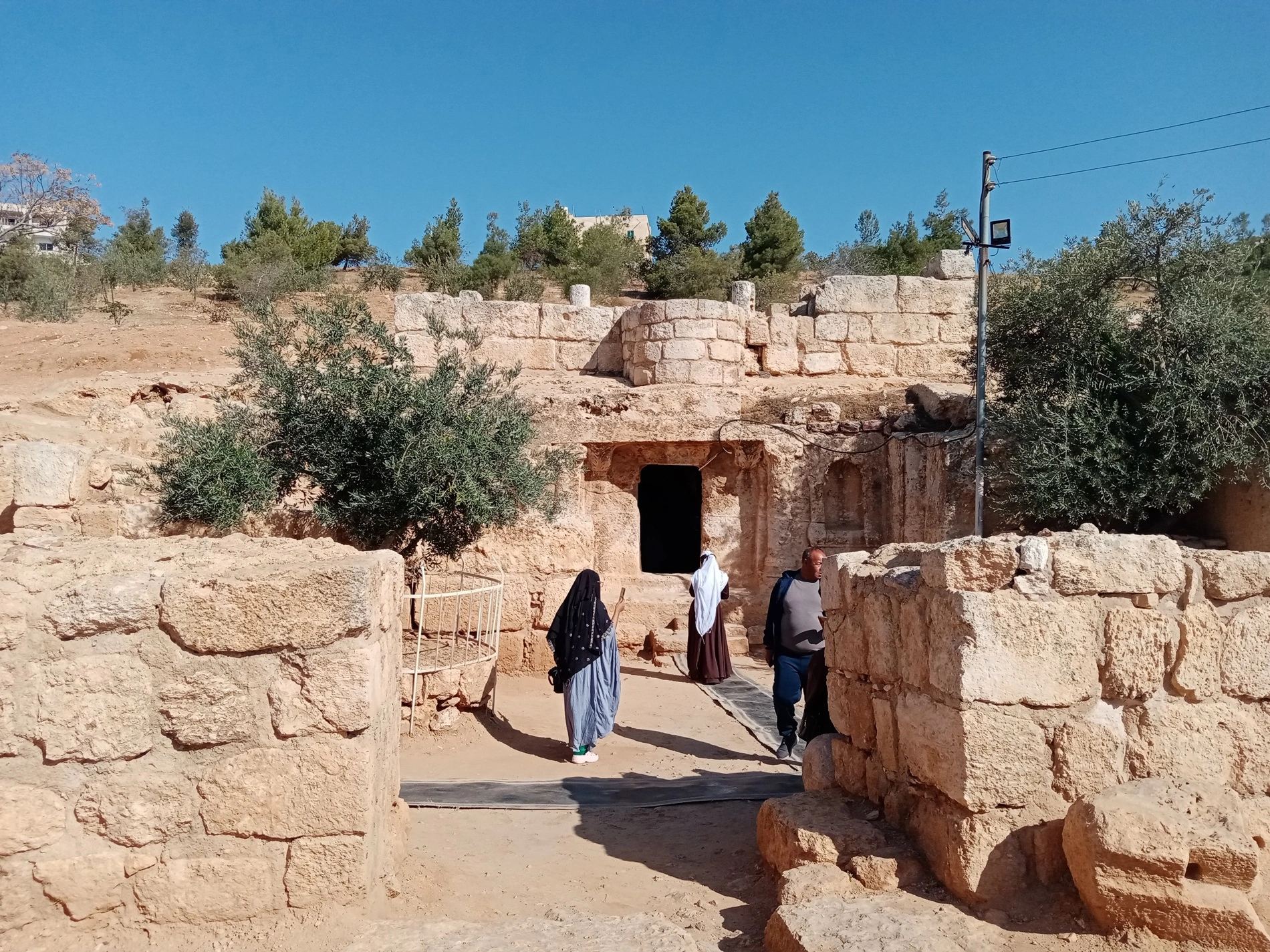
Just outside Amman in the village of Rajib you find Kahf Al Raqeem, also known as Cave of the Seven Sleepers. It is a spiritually significant site mentioned in the Qur’an in Sura Al-Kahf. Persecuted by the Roman Emperor Trajan, a group of faithful youths took refuge in the cave. To preserve them, God put them to sleep for several centuries. One can enter the small cave and see the tombs. One tomb has a small hole through which to observe human bones. Closeby are Byzantine and Roman remains which fit the description in the Holy Quran.
The Blessed Tree, known as Sidrat al-Buqayawiyya or the Prophet's Tree, is a popular religious site in Jordan. It is situated along the historic trade route between Mecca and Damascus, once used by caravans. It is believed that Prophet Mohammad at the age of 12 rested under this tree while traveling with his uncle Abu Talib to Syria. On the return trip, a Christian monk named Bahira (or Buhaira) recognized Muhammad's prophetic signs. The tree is more than 1,400 years old and surrounded by the arid landscape of the eastern Jordanian desert. The drive from Amman lasts 2 hours; the tree can be found close to Safawi. Nearby you find a seating area and a small mosque.
How to Plan Your Visit to Jordan's Islamic Heritage Sites: When visiting mosques and shrines, modest dress is essential. Women are required to cover their hair and wear long sleeves and skirts or pants. Some sites provide abayas if needed. The caves and the tombs of revered martyrs, offer a journey through time and faith. Ready to explore? Have a look at our sample itinerary or let us plan your spiritual journey to Jordan!
 English
  Chinese
 French
 German
 Italian
 Portuguese
 Russian
 Spanish