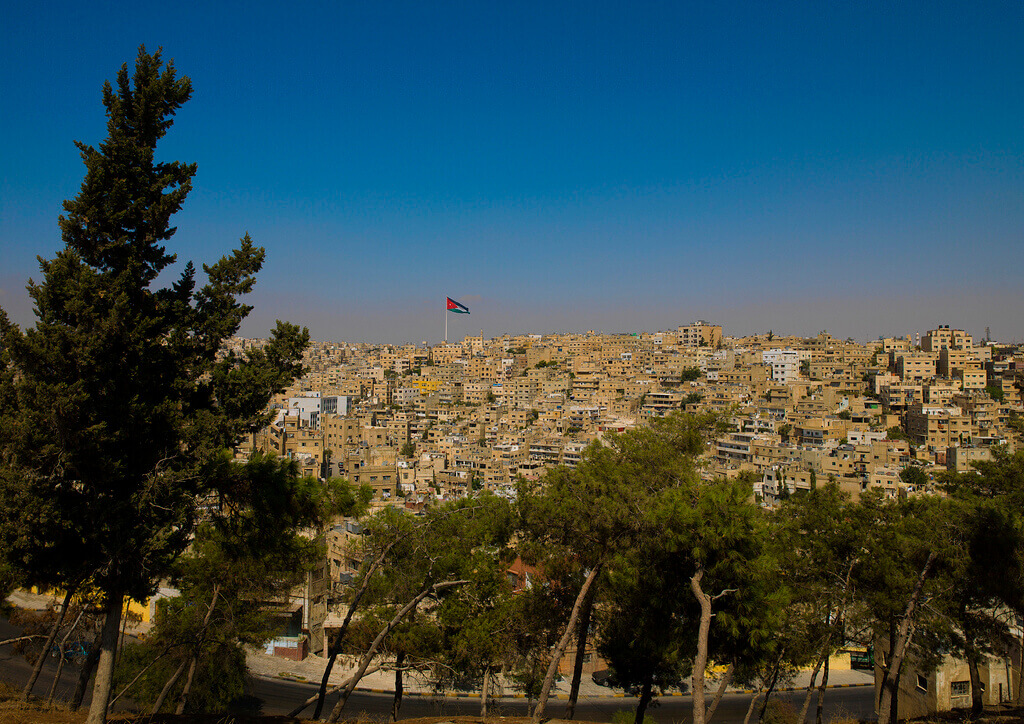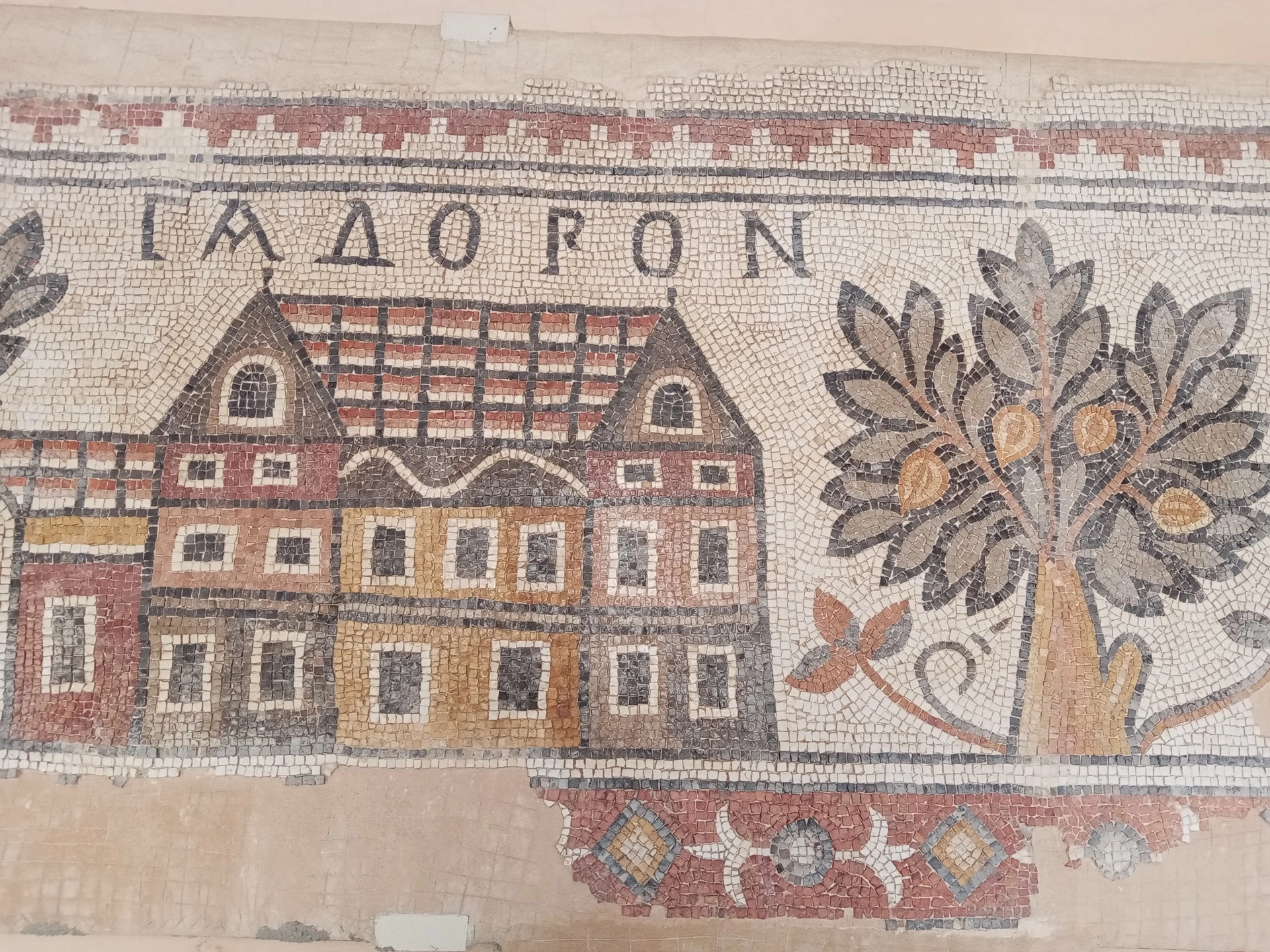
The city of Madaba, located 30 km south-west of Amman, is best known for its excellent mosaics of the 6th to the 8th centuries which serve as a window into its Byzantine and Umayyad past. Madaba is often labelled the “City of Mosaics” and a treasure trove of religious significance that tell stories of the city’s religious and cultural evolution. Mosaic art is still alive today. The Madaba Institute for Mosaic Art and Restoration (MIMAR), founded in 2007, offers expert training in the ancient craft of mosaic creation and restoration. Here's a comprehensive article about what to see in Madaba that covers key attractions, historical insights, and travel tips.
Madaba’s history dates to ancient times, with evidence of habitation since the Neolithic period. Its location along ancient trade routes contributed to its importance throughout history. Madaba has been inhabited for at least 4,500 years and is mentioned in the Bible as the Moabite city of Medeba. After many centuries of Moabite and Nabataean rule, Madaba and its surroundings became part of the Roman province of Arabia in 106 AD. The city grew and prospered according to the model of a typical Roman provincial town, with colonnaded streets and magnificent buildings.
The second century witnessed a rapid spread of the Christian faith in the Middle East, despite the persecution of its adherents by the Romans. In the fourth century, Emperor Constantine converted to Christianity, which subsequently became the predominant religion in the Roman Empire. In Byzantine times, more precisely from the 5th century, Madaba had its own bishop. The Bishopric oversaw a region extending to Mount Nebo to the west, Mujib and Umm Ar-Rasas to the south, and Hisban to the north. Madaba flourished thanks to its newly achieved rank. The abundance of artistic mosaics, which can be found all over the city, proves the importance of Madaba as the church center of the Byzantine period.
Discover the Mosaics of Madaba
The discovery of Madaba’s wealth of Byzantine remains and mosaics began in the late 19th century. In 1879 Madaba was resettled by local Christian families from Kerak and built their houses on the foundation of ruins. In the process, ancient floor mosaics had been unearthed. It is best to discover the mosaics, in all their beauty and artistry, on foot. Most of the mosaics are concentrated on a relatively small area in the city center. The most famous mosaic is in a church that is still in use. Therefore, Sunday is less suitable for a visit to Madaba.
Madaba Map of St George's Church
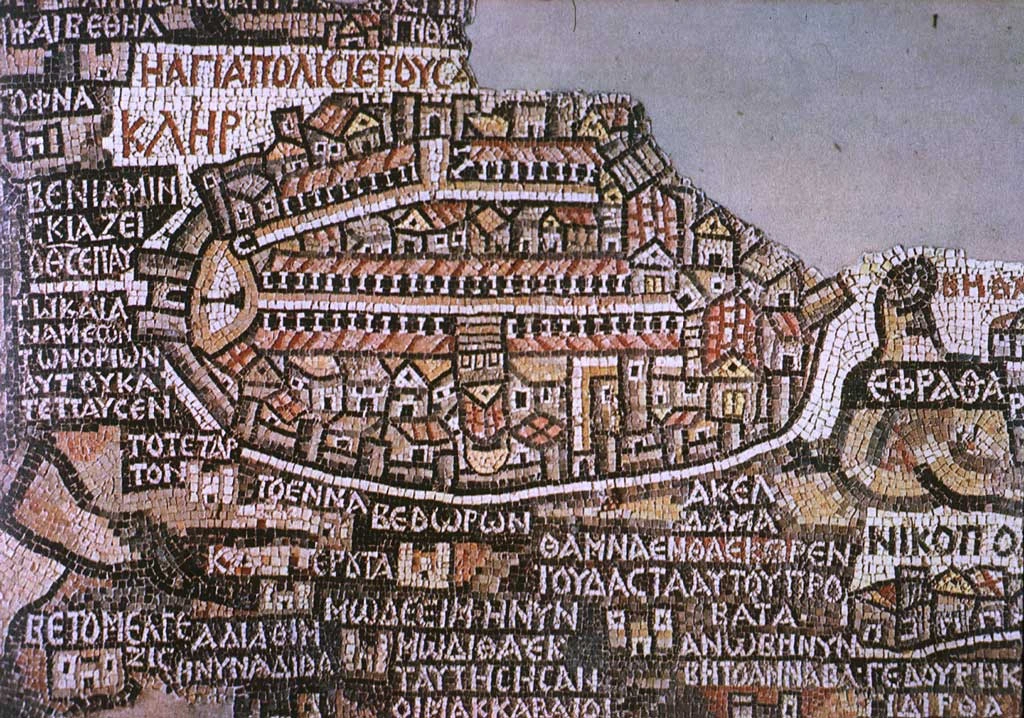
The most popular attraction in Madaba is the mosaic map in the Greek Orthodox Church of St. George. The map was created around the year 560 and at that time decorated the front part of a Byzantine church. Today, only parts of the map have been preserved, which originally measured 16 x 6 meters and consisted of about 2 million stone blocks or "tesserae" - the small pieces of stone and glass. The creation of the map took about six years. It depicts the Holy Land (Palestine) from Lebanon to Egypt. The centre shows Jerusalem with its city walls, towers and gates and the Church of the Nativity. You can trace the Dead Sea, the Jordan River, Jericho, Bethlehem, Nablus, Hebron, the Nile Delta in Egypt and southern Lebanon.
The names of the places had been set in different sizes and in the colors red, black and white; red is reserved for the most important places and the biblical areas. Of the 157 geographical names in the Greek language, most have been identified. Symbols were also used: a gate between two towers marks a city, a church marks a holy place, palm trees an oasis. The map, like the church itself, is oriented to the east, although the inscriptions run from left to right as usual. Despite the limited area, the mosaic artists were able to reproduce the geographical location of the places with precision. The map was intended to create a narrative for a sacred landscape and was a statement of religious devotion.
→ Entrance fee: 3 JD per person. The fee is not included in the Jordan Pass.
→ Opening Hours: 08:00 to 17:00; Fridays: 09:30 to 17:00; Sundays: 10:30 to 17:00.
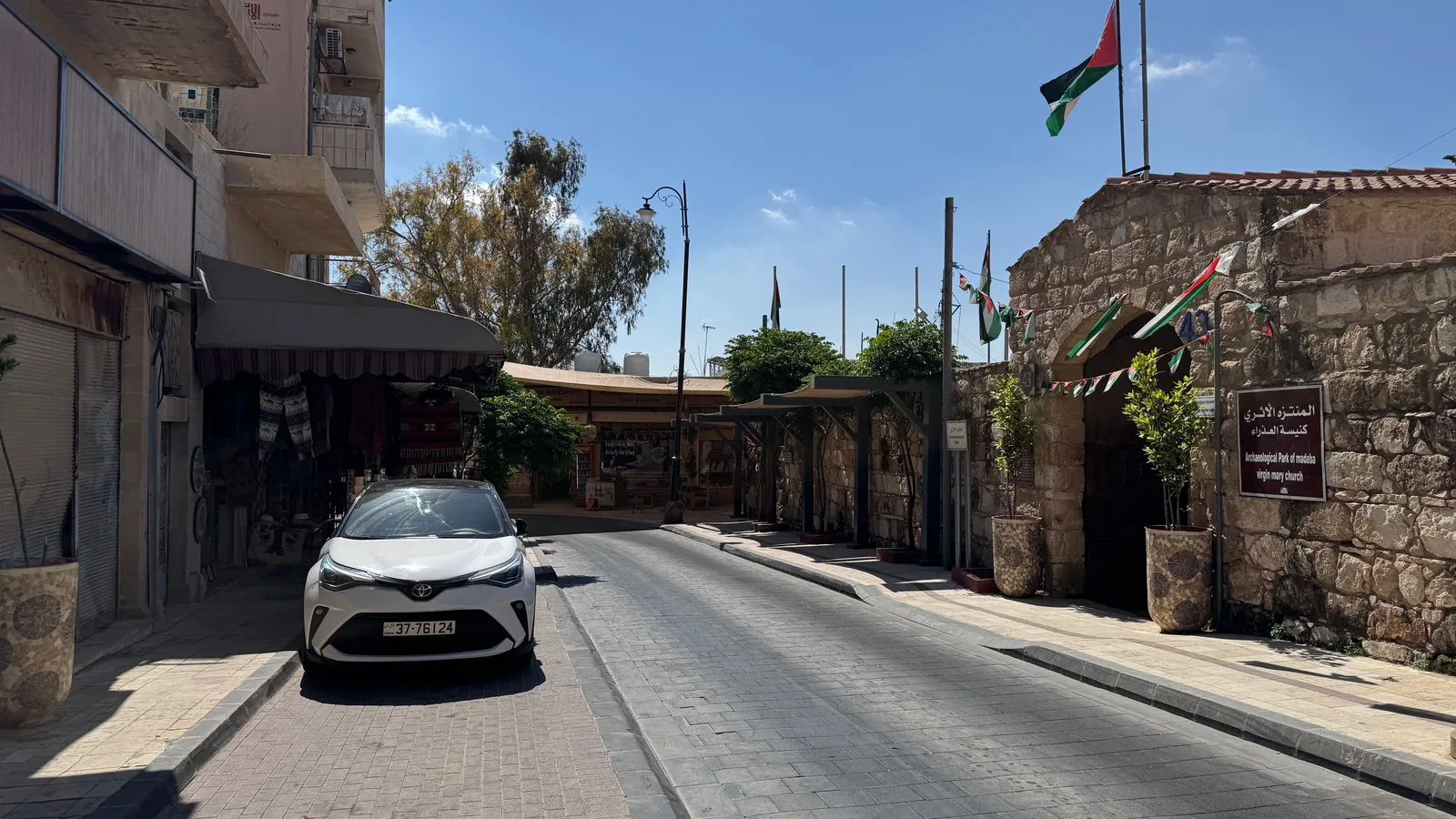
Next is the Archaeological Park, just a few minutes on foot from the Greek Orthodox St George’s Church. It is a compact complex that showcases mosaics and archaeological remains from various periods as the layered past of Madaba. The park is dotted with remnants of ancient churches, houses. What the park underscores is that Madaba was a prosperous provincial town, with its wealthy citizens adorning their homes with these intricate floors.
Several structures are concentrated along the city’s ancient east-west Roman road, which is itself an important relic. This park is divided into two parts. The first extends from the Church of the Sunna’ Family to the area of the Church of the Virgin, the Hippolytus Hall and the Church of Prophet Elias. The second part includes the area to the west of Burnt Palace and the Martyr’s Church. The most popular mosaics are the ones of the Church of the Virgin Mary and Hippolytus Hall.
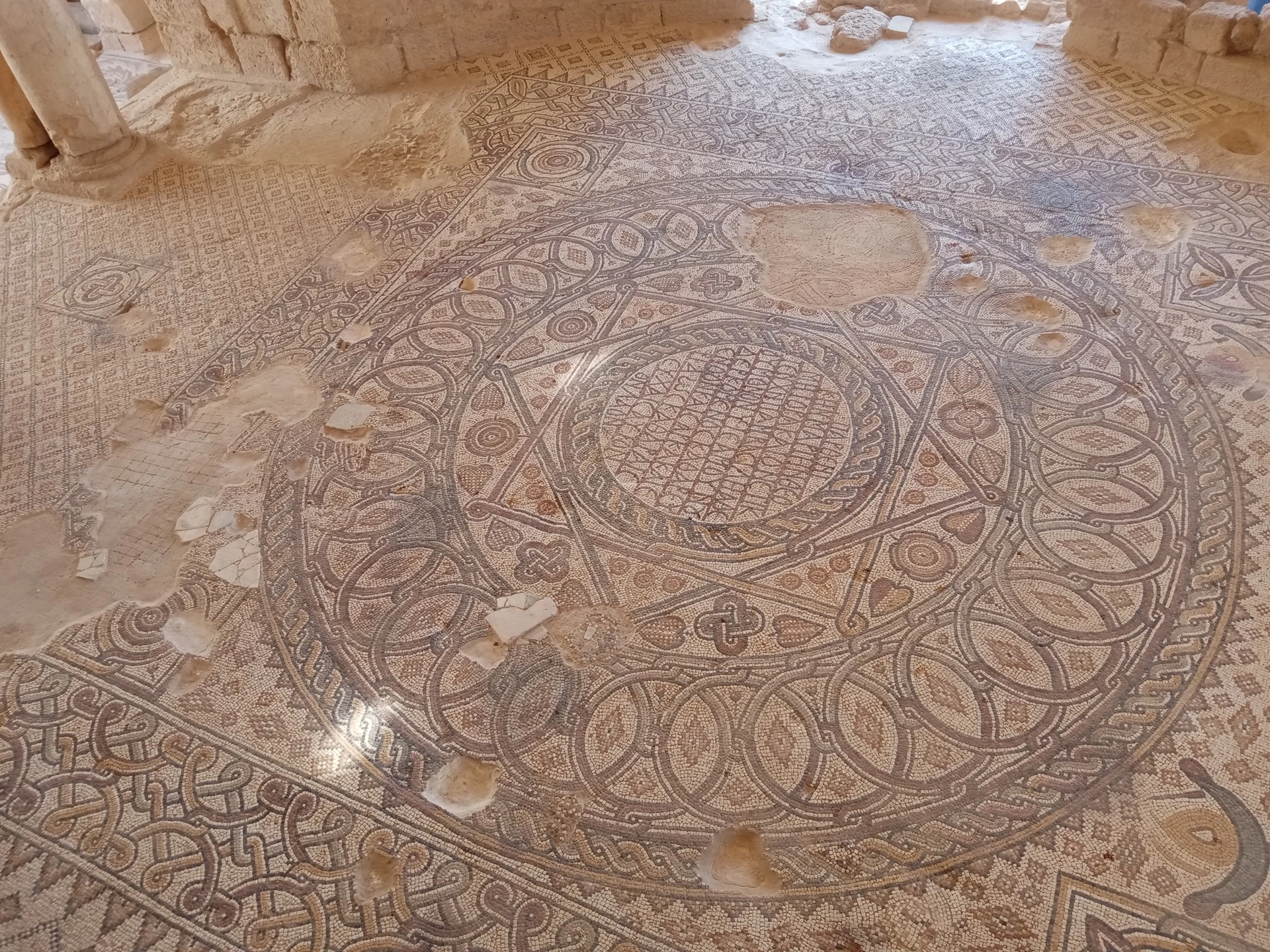
In 1887 a large floor mosaic was unearthed in an ancient building in Madaba, used as a private home at that time. This was the first of Madaba’s floor mosaics to become known to scholars. The inscriptions contained in the mosaic say that the church was dedicated to the Virgin Mary. It was built in the 6th century on the foundations of a Roman temple. The flowers and buds that frame the mosaic date back to this time. The geometric main field with the medallion in the middle was laid out later, as part of restoration work during the Umayyad period, in the year 767. A small section of the geometric border, which is technically different, is from the original floor and was incorporated into the later composition. The design of this newer layer of mosaics is clearly influenced by Islamic patterns and arabesque.
Hippolytus Hall
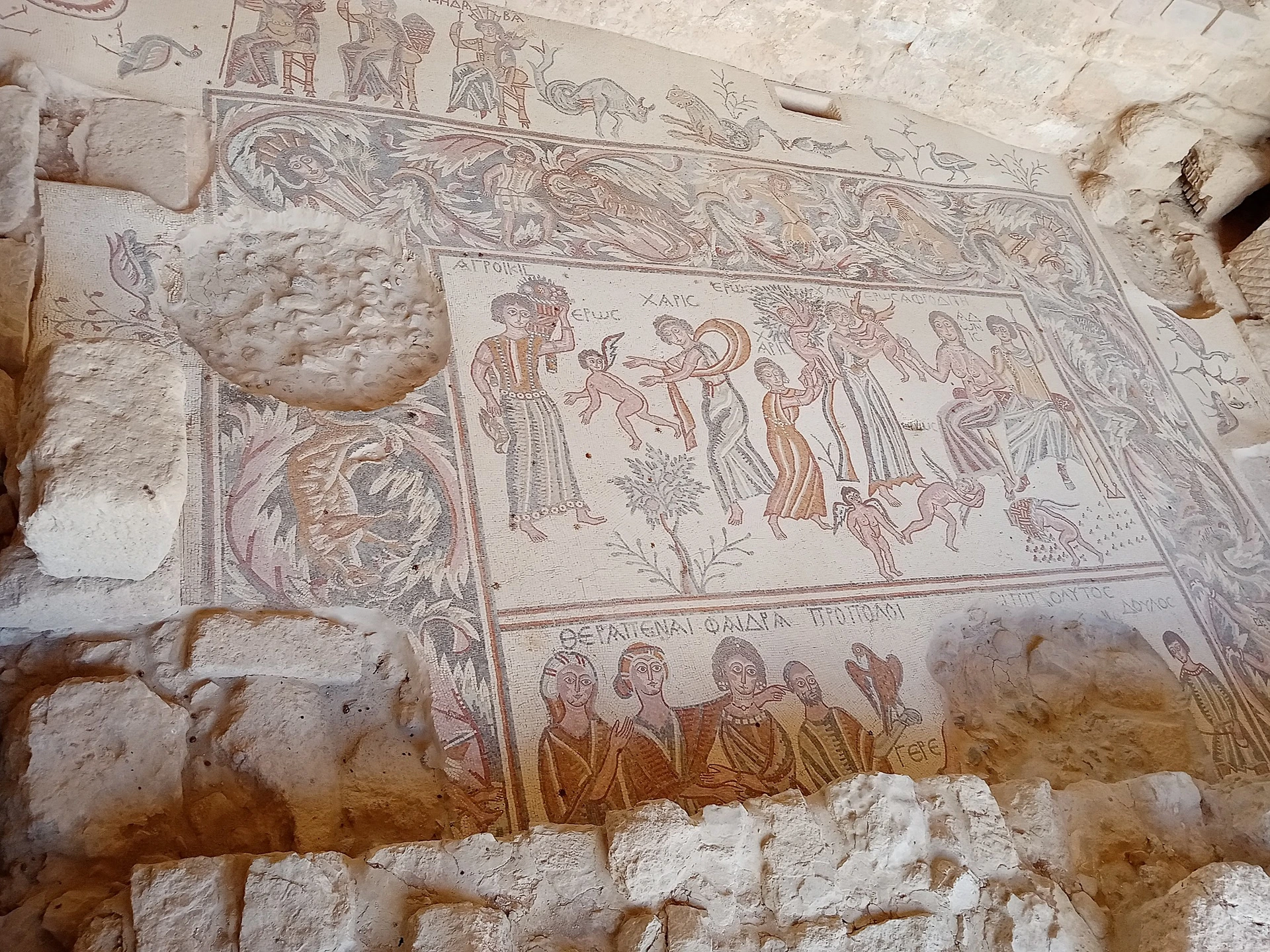
In 1905 it was discovered that the Church of the Virgin Mary was built above the hall of an earlier Madaba mansion of the early 6th century. This mosaic is known as Hippolytus Hall. The frame of this mosaic is covered with hunting and sheep scenes and has representations of the 4 seasons at the corners. The midfield shows figures from the Greek tragedy Hippolytus by Euripides. According to the story, Theseus, King of Athens, is exiled for a year for a crime he committed. Hippolytus is his illegitimate son, who has sworn chastity and revers the deity Artemis instead of Aphrodite. To get her revenge, Aphrodite has his stepmother Phaedra fall in love with Hippolytus. This mosaic shows some of the major characters of the story named in the work.
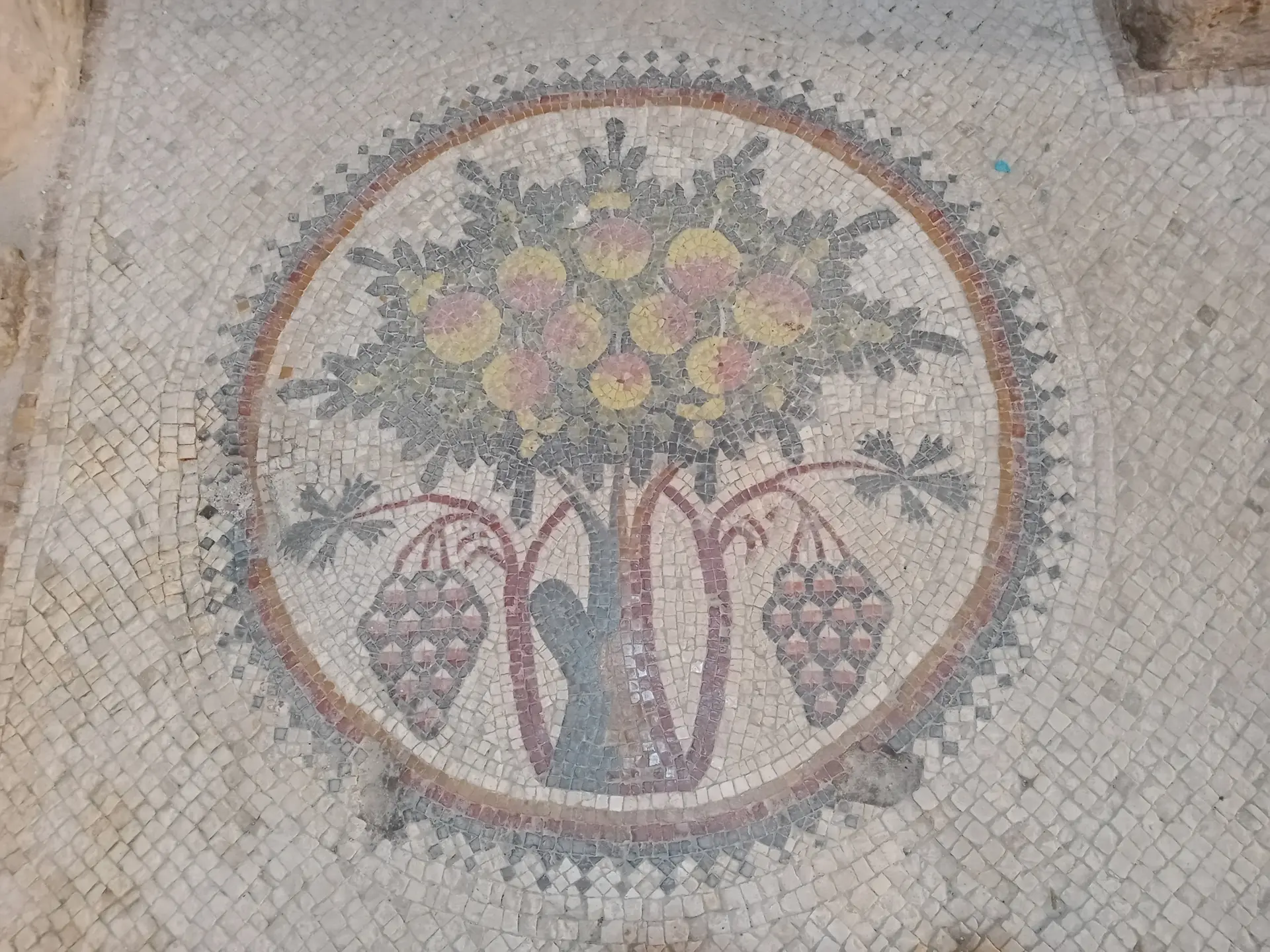
In the Western part of the Archaeological Park, one can view the remains of Martyr’s Church, known also as Al Khadir Church. This 6th century church contains a mosaic floor, of which general outlines are still visible. But large parts had been damaged by iconoclasts. The iconoclastic movement of the 8th century destroyed images of humans and of animals, as it objected the depiction of living beings. In the Burnt Palace you find several mosaics that adorned the floor of a large residential building that burned out in Byzantine times and was subsequently abandoned. The mosaic in the middle room consists of a grid filled with trees, flowers, birds, fish and land animals. Within this frame there are decorations with rural or hunting motifs. In the north wing you find the personification of one of the 4 seasons and a bust of the Goddess Tyche with a crown of walls and towers, the symbols of the city.
→ Entrance fee Archaeological Park: 3 JD per person. The fee is covered with the Jordan Pass.
→ Opening Hours: 08:00 to 16:00.
Madaba Archaeological Museum & Church of the Apostles
If you can't get enough of mosaics, visit the Madaba Archaeological Museum near the park. It offers a collection of mosaics from different sites around Madaba. Moreover, artefacts such as pottery, coins, jewelry and traditional costumes are on display. Outside the city centre, about 10 minutes on foot, the Church of the Apostles is located. The church’s mosaics depict floral motifs and geometric patterns. The highlight is the central medallion, the personification of the Sea. It shows a woman rising from the sea, surrounded by fish and other sea creatures. A Greek inscription mentions the name of the mosaicist, Salaman.
→ Entrance fee for both attractions is included in the fee of the Archaeological Park and in the Jordan Pass.
→ Opening Hours: 08:00 to 17:00.
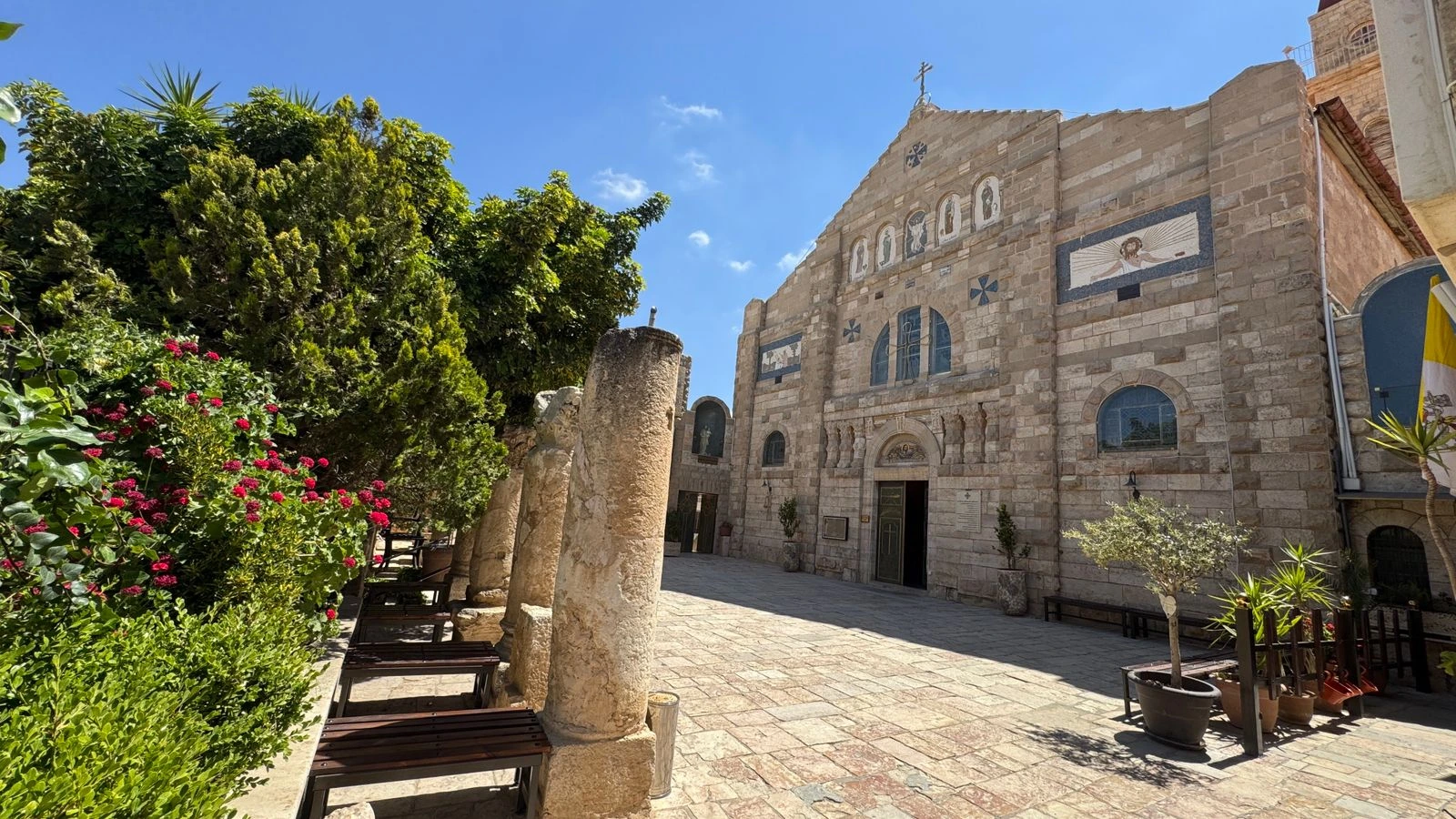
Not far from the Archaeological Park, the John the Baptist Church is worth a visit to explore more of Jordan’s religious and historical heritage. This catholic church has a crypt, a museum explaining the history of Christianity in the area, displaying relics and icons, a 3,000-year-old Moabite well, linking to the region’s ancient past. The church features a climb to the bell tower, offering visitors panoramic views over the city and the surrounding area.
→ Entrance fee: 1.5 JD per person. The fee is not included in the Jordan Pass.
→ Opening Hours: 08:00-18:00. The church is not open to tourists during Mass and other religious services, so hours may vary.
● When planning your trip, consider spending at least half day in Madaba to comfortably explore its major sites. Wear comfortable shoes and bring sun protection, especially for the period from spring to autumn. Modest clothing is recommended when visiting churches.
● The narrow streets of the old town in Madaba are worth meandering. You will find souvenirs, spices and local crafts. Small workshops still practise the art of mosaic-making. The area is a good place to taste Jordanian cuisine and local sweets.
● When in Madaba you can include in your tour nearby sites like Mount Nebo, Mukawir, the Baptism Site of Jesus, or the Dead Sea.
● If you are thinking about spending a night in Madaba, the town has a good range of accommodation, from simple guesthouses to comfortable hotels.
 English
  Chinese
 French
 German
 Italian
 Portuguese
 Russian
 Spanish